Table of Contents
Did you know that The Pokémon Company has distributed a staggering 43.2 billion most valuable Pokémon cards worldwide since its inception?
Remarkably, the first half of 2021 witnessed a 536% surge in gross merchandise value for Pokémon cards on eBay, with the Pikachu Illustrator card selling for an astonishing $4,855,000, making it the most expensive Pokémon card in the world. This incredible growth follows over a decade of relative stability, proving that Pokémon card collecting remains a significant phenomenon even after 25 years.
Several factors determine Pokémon card rarity and subsequently, their value. These include the card’s condition, its age (with cards from 1999-2003 typically worth more), limited print runs, and even production errors. Professional grading services like PSA and Beckett further influence rare Pokémon card prices by assessing factors such as centering, edges, and surface quality.
For collectors looking to uncover hidden treasures within their binders and boxes, understanding these valuation factors is essential. This guide will help readers identify potentially expensive Pokémon cards lurking in their collections, explain what makes certain cards valuable, and provide strategies for protecting and potentially selling these cardboard investments.
What Makes a Pokémon Card Valuable
The value of Pokémon cards depends on several critical factors that collectors and investors carefully consider when assessing their collections. Understanding these elements helps enthusiasts identify potentially valuable cards hiding among their possessions.
Rarity and limited print runs
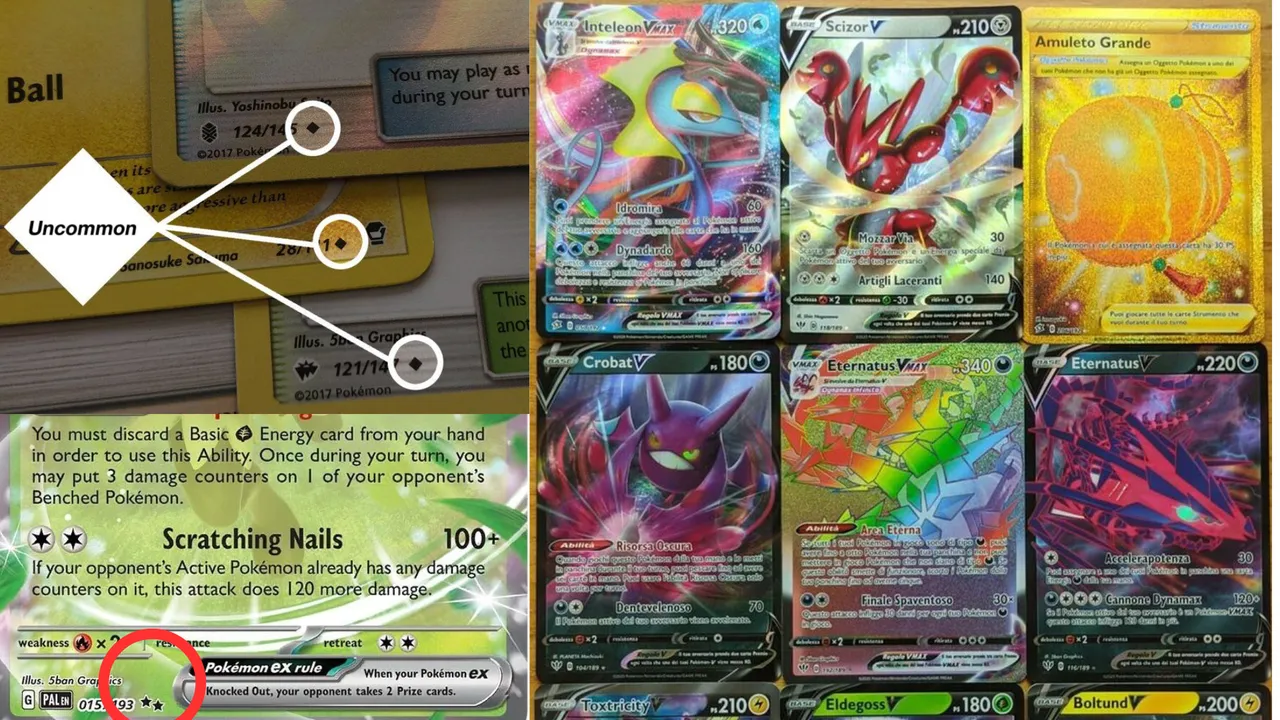
Rarity forms the foundation of Pokémon card value. Cards are divided into rarity levels, which are marked by symbols at the bottom of each card:
- Circle for common
- Diamond for uncommon
- Star for rare
- Holographic star or special markings for ultra-rare cards
These symbols help collectors quickly identify the card’s rarity and potential value. Moreover, limited print runs significantly increase value. First-edition cards, particularly those from the Base Set (1999), command premium prices due to their scarcity. Cards from special collections or those featuring printing errors are particularly sought after by serious collectors.
Condition and grading standards
A card’s physical condition fundamentally affects its worth. Professional grading companies like PSA (Professional Sports Authenticator), BGS (Beckett Grading Services), and CGC (Certified Guaranty Company) evaluate cards on a 10-point scale. Cards receiving the coveted PSA 10 “Gem Mint” grade often sell for many times the value of the same card in lesser condition. Graders assess centering, corners, edges, and surface quality. Even slight flaws can greatly impact a card’s value
Popularity of the Pokémon
The featured Pokémon character itself plays a crucial role in determining card value. Iconic characters like Charizard, Pikachu, and Mewtwo consistently command higher prices than lesser-known creatures. In addition to this, competitive gameplay viability can temporarily boost a card’s value, especially during tournament seasons when certain cards become essential for winning strategies.
Historical and promotional significance
Cards with unique historical relevance or promotional origins often become the most expensive Pokémon cards. Tournament prize cards, staff-exclusive promotional cards, and anniversary editions typically have extremely limited circulation. Trophy cards awarded at championships, pre-release cards, and special promotional items distributed at exclusive events represent some of the rarest Pokémon card categories, making them highly desirable to collectors worldwide.
How to Identify Rare and Valuable Cards
Spotting potentially valuable cards requires attention to specific visual details. Trained collectors can identify certain markers that often indicate higher value.
Look for 1st Edition and Shadowless stamps
First edition cards typically feature a small black circle with the number “1” and “EDITION” text. On Pokémon cards, the rarity symbol is located on the left side, midway between the top and bottom. On Energy cards, it’s in the top right corner, and on Trainer cards, in the bottom left. Shadowless cards from the second print run lack both the rarity symbol and the drop shadow around the artwork border found in later unlimited editions. Shadowless cards can also be identified by their thinner HP font and the inclusion of “99” in the copyright date. Learn more about it here.
Check for holographic and reverse holo features
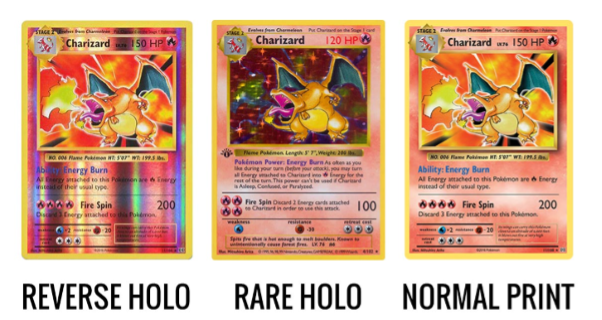
Holographic (holo) cards display a shiny effect on the Pokémon artwork only, while reverse holos apply the shimmering effect to everything except the artwork. Every booster pack contains one reverse holo card, making regular holos generally more valuable. The most desirable holographic patterns include Pokéball and Master Ball holos, which have extremely low pull rates.
Spotting error and misprint cards
Production mistakes often create uniquely valuable cards. Common errors include misspellings (like “Nintedo” instead of Nintendo), miscuts with disproportionate borders, blank fronts, misaligned holographic foils, and double printings. Corrected errors typically hold higher value than uncorrected ones because of their shorter print runs.
Understanding Pokémon card rarity symbols
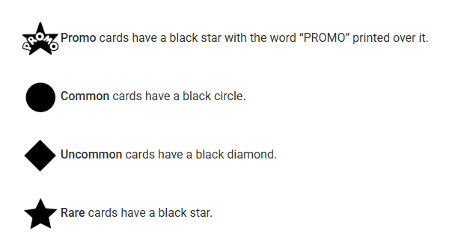
Rarity symbols appear at the bottom corner of each card: a black circle indicates Common, a black diamond represents Uncommon, and a black star denotes Rare cards. Modern sets have expanded this system with double rare (two black stars), ultra rare (two silver stars), and hyper rare (three gold stars). Promotional cards display a black star with “PROMO” printed across it.
Examples of the Most Valuable Pokémon Cards
Some Pokémon cards have reached astonishing values at auction, becoming prized collectibles comparable to fine art or vintage wine. These examples represent the pinnacle of Pokémon card collecting.
Pikachu Illustrator – the most expensive Pokémon card in the world
The legendary Pikachu Illustrator card holds the record as the most valuable Pokémon card ever sold. In July 2021, YouTuber Logan Paul acquired a PSA 10 graded copy for SGD 7,079,473.33 through a private sale. Only 41 copies exist worldwide, originally awarded to winners of illustration contests held by CoroCoro Comic magazine in 1997-1998. Paul’s purchase involved trading his PSA 9 Illustrator (worth SGD 1,711,152.32) plus SGD 5,368,321.01 in cash. Even lower-graded versions command extraordinary prices—a PSA 7 sold for SGD 1,207,872.23 in February 2022.
Trophy Pikachu and other tournament cards
Trophy Pikachu cards were awarded to top finishers in early Pokémon tournaments. The Silver Trophy Pikachu No.2 from the 1997-1998 Lizardon Mega Battle tournament sold for SGD 595,883.63 in September 2023. With only 14 believed to exist, it’s among the rarest tournament cards. A set of three Trophy Pikachu cards (gold, silver, and bronze variants) sold for SGD 1,065,906.98 in 2022. Another notable tournament card, the 1997 Bronze Trophy Pikachu, fetched SGD 402,624.08 at Heritage Auctions.
Charizard 1st Edition Shadowless
The iconic 1st Edition Shadowless Charizard continues to command impressive prices. A PSA 10 copy sold for SGD 563,673.71 in March 2022, setting a record for this specific card. Indeed, various PSA-graded versions maintain substantial value, PSA 9 copies average SGD 31,438.90, while even PSA 1 grades sell for around SGD 4,898.59. Despite over 3,000 submissions to PSA, only 121 have achieved the coveted PSA 10 Gem Mint designation.
Rare cards from Scarlet and Violet sets
Even modern Scarlet & Violet sets feature valuable cards. The Greninja ex Special Illustration Rare from Twilight Masquerade commands SGD 551.82. Buy at DXCOLLECTION for other remarkable finds like the Espeon ex Special Illustration Rare (SGD 572.61) and Mew ex from Paldean Fates (SGD 501.28). The Charizard ex from Paldean Fates with its Terastallization artwork fetches SGD 271.85, while the Charizard Special Illustration Rare from S&V 151 sells for SGD 371.46 despite recent reprints.
How to Evaluate and Protect Your Collection
Once you’ve identified potentially valuable cards in your collection, the next crucial steps involve proper evaluation, protection, and possibly monetisation. These practises ensure your most valuable Pokémon cards maintain their condition and worth over time.
Using PSA, BGS, and CGC for grading
Professional grading dramatically increases card value whilst authenticating against counterfeits. The three most respected services offer different approaches:
PSA (Professional Sports Authenticator) grades on a 1-10 scale without half-points, with PSA 10 “Gem Mint” being the coveted top grade. Their standards allow slight imperfections even at top grades—a 55/45 centering can still achieve PSA 10. With over 40 million items certified since 1991, PSA commands the highest market premium but charges SGD 33.54 per single card.
BGS (Beckett Grading Services) uses a 1-10 scale including half-grades and detailed subgrades for centering, corners, edges, and surface. Their coveted “Black Label” designation commands premium prices.
CGC (Certified Guaranty Company) recently updated their scale, with former 9.5 cards now designated as CGC 10 Gem Mint. They’ve earned a reputation for stricter grading standards, particularly regarding centering.
Storing cards to maintain condition
Proper storage prevents degradation of your valuable cards. Start with acid-free, non-PVC sleeves as your first line of defence. For maximum protection, use a system of sleeve + toploader + team bag.
Alternatively, high-quality side-loading binders prevent binder dings—just never overstuff them. Store binders upright like books to prevent compression damage.
Maintain consistent temperature and humidity, away from direct sunlight. Consider silica sachets, rotated monthly, to manage moisture.
Tracking Pokémon card prices online
Several platforms help monitor market values. Buy at DXCOLLECTION provides pricing insights alongside our extensive inventory. Furthermore, websites like TCGPlayer and eBay sold listings show actual transaction prices rather than just asking prices.
When and how to sell valuable cards
Timing matters when selling. Check recent sales through eBay’s “Sold Items” philtre to understand current market rates. For valuable cards worth more than grading fees, consider professional grading before selling.
Popular selling platforms include eBay (with Buy It Now or Auction options), TCGPlayer, and social media marketplaces. Remember that all platforms charge commission fees, typically between 5-15%.
Conclusion
Old Pokémon card collections may hold hidden gems worth surprising amounts. To identify valuable cards, collectors should consider rarity, condition, character popularity, and print history, including first editions, shadowless prints, and error cards.
Even without ultra-rare finds like Pikachu Illustrator, many collections contain cards worth grading and preserving. Services like PSA or CGC can enhance value, while proper storage protects long-term condition.
As the market grows, staying informed through price tracking and rarity cues is key. Whether collecting or selling, knowledge is the ultimate asset.
Ready to uncover the true value of your collection?
Visit DXCOLLECTION to explore, shop rare cards, or get started with grading and storage solutions trusted by collectors in Singapore and beyond
FAQs
How can I identify potentially valuable Pokémon cards in my collection?
Look for cards with first edition stamps, shadowless prints, holographic features, and rare Pokémon characters. Check the rarity symbol (circle, diamond, or star) at the bottom of the card. Cards from limited print runs or with production errors can also be valuable.
What makes a Pokémon card particularly valuable?
The value of a Pokémon card is determined by its rarity, condition, age, popularity of the featured Pokémon, and historical significance. Limited edition cards, those from early sets (1999-2003), and cards with special promotional or tournament origins are often the most valuable.
How important is a card’s condition in determining its value?
Condition is crucial. Professional grading services like PSA, BGS, and CGC evaluate cards on a 10-point scale. Cards in pristine condition (graded PSA 10 “Gem Mint”) can be worth many times more than the same card in lesser condition.
Are modern Pokémon cards from recent sets valuable?
Yes, some modern cards can be valuable. Special Illustration Rare cards from recent sets like Scarlet & Violet can command high prices.
How should I store my valuable Pokémon cards?
Use acid-free, non-PVC sleeves as primary protection. For maximum safety, employ a system of sleeve + toploader + team bag. Store cards in a cool, dry place away from direct sunlight. Consider using silica gel packets to manage moisture, replacing them monthly.